Laser safety glasses are eyewear with filters that block a specific band of laser wavelengths strongly enough to keep exposure below the eye-damage threshold. The two numbers that decide whether a pair protects you are the wavelength range and the optical density (OD) at that wavelength: OD 3 cuts the beam by a factor of 1,000, OD 5 by 100,000. No pair works for every laser, so you choose glasses for the lasers in your lab, not by brand or color. This guide explains how, as part of NewRoad's optics and opto-mechanics range, which includes laser safety equipment.
Key takeaways
- Optical density is logarithmic: OD 1 transmits 10%, OD 3 transmits 0.1%, OD 6 transmits 0.0001%.
- Protection is wavelength-specific; glasses rated for 532 nm may offer little or no protection at 1064 nm.
- Class 3B (continuous output up to 0.5 W) and Class 4 lasers require eye protection; Class 2 visible lasers are limited to 1 mW.
- EN 207 covers full laser protection, EN 208 covers alignment eyewear, and ANSI Z136.1 is the US laser safety program standard.
- Fit, side protection and visible light transmission matter as much as OD in daily use.
Table of Contents
What Do Laser Safety Glasses Do?
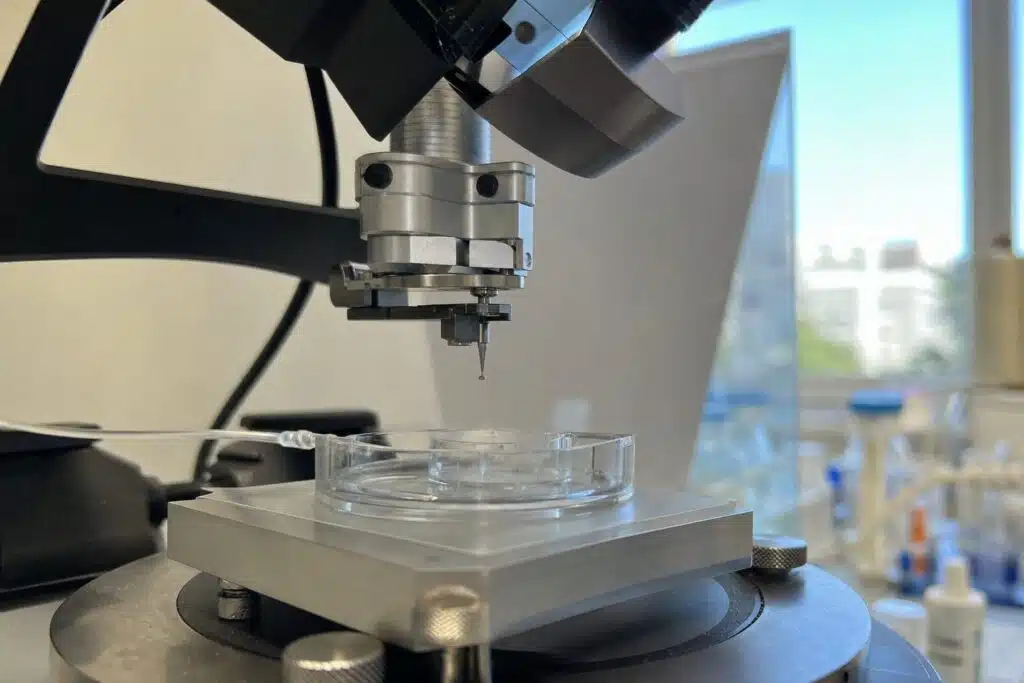
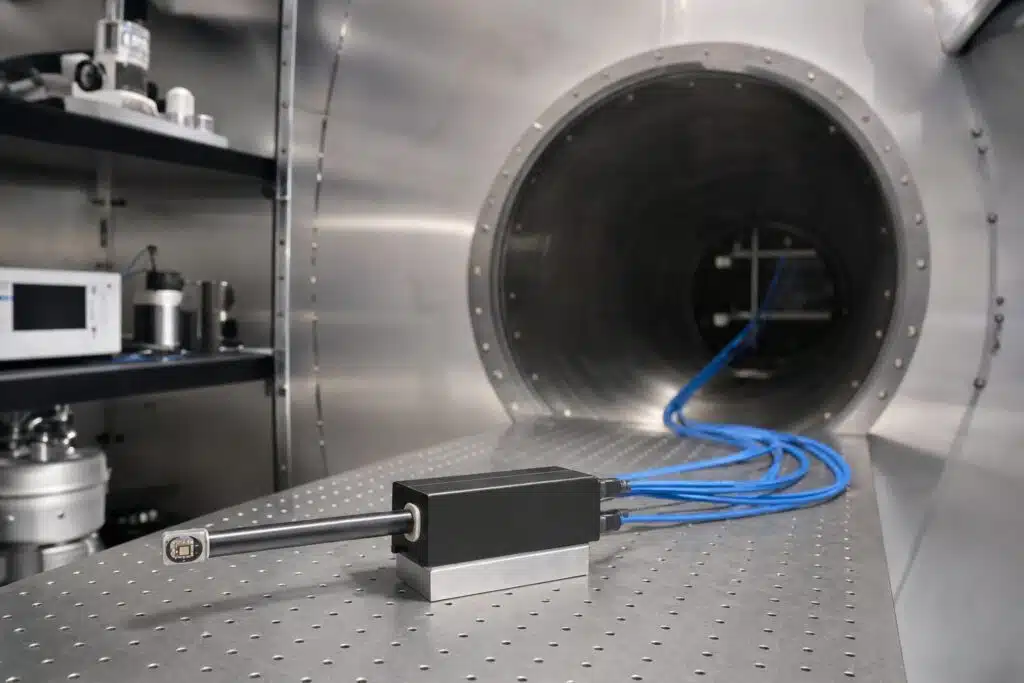
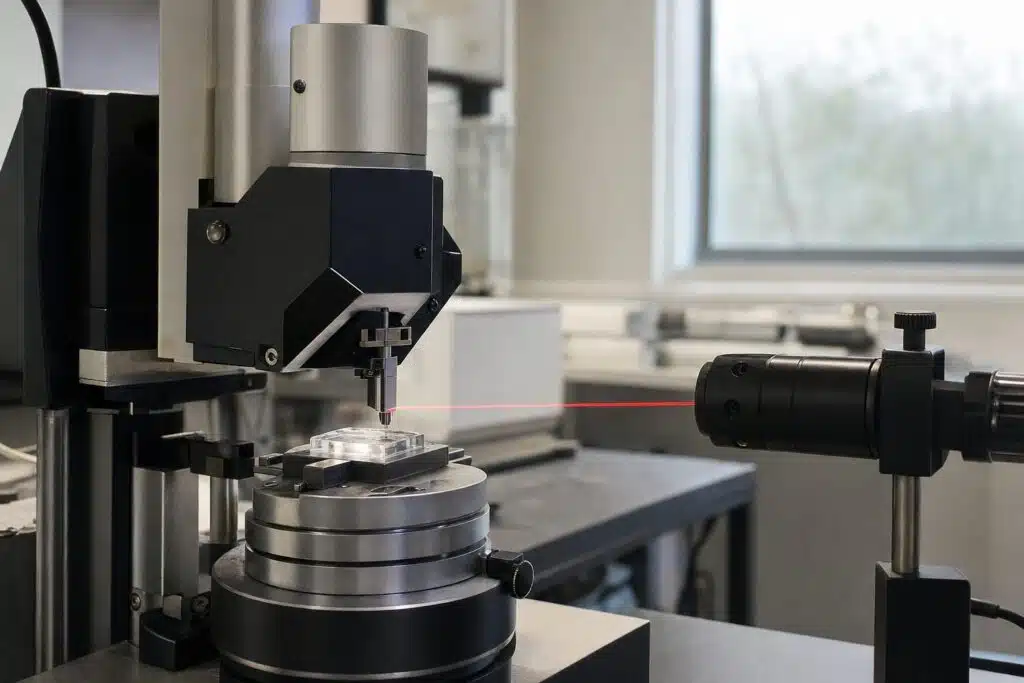
Laser safety glasses, also called laser goggles or laser protective eyewear, use absorbing or reflective filters that attenuate one or more wavelength bands while letting other light through so you can still see. They protect against direct beams, specular reflections from mirrors and optics, and diffuse scatter. They do not make a laser "safe to look at"; they reduce exposure to a level below the maximum permissible exposure for a limited time, usually long enough to react and move away. Research setups such as optically detected magnetic resonance, where a green laser pumps a diamond sensor, show why eyewear has to be matched to the laser wavelength and power.
Glasses are the last line of defence
Engineering controls come first: beam enclosures, beam blocks, interlocks and controlled access. Shields such as OptoSigma's safety eye guards and laser shield window film contain stray beams at the source. Eyewear covers what remains.
What Does Optical Density Mean?
Optical density is the base-10 logarithm of the attenuation. A filter with OD 3 reduces beam power by a factor of 1,000, so 1 W becomes 1 mW. Each extra OD unit adds another factor of 10: OD 4 transmits 0.01% and OD 6 transmits 0.0001%. The same idea underlies absorbance in spectroscopy, explained in our article on spectrometers and spectrophotometers.
Worked example
Illustrative arithmetic, not a safety calculation: a 500 mW continuous laser seen through OD 5 filters delivers about 5 µW to the eye. Whether that is acceptable depends on wavelength, exposure time and beam size, which is why a laser safety officer calculates the required OD from the actual laser parameters.
Why "more OD" is not always better
Very high OD in the visible range also darkens the view. If users cannot see the beam path or their work, they take the glasses off, which is the most common cause of accidents. Pick the OD the hazard requires and the highest visible light transmission that still meets it.
Which Laser Classes Need Eye Protection?
IEC 60825-1 sorts lasers into classes by hazard.
- Class 1 and 1M: safe in normal use; 1M becomes hazardous through magnifying optics such as microscopes and telescopes.
- Class 2 and 2M: visible lasers (400 to 700 nm) limited to 1 mW continuous, relying on the blink reflex, which protects within about 0.25 s.
- Class 3R: visible continuous lasers up to 5 mW; low risk with careful handling.
- Class 3B: continuous output up to 0.5 W; hazardous to direct viewing, while diffuse reflections are generally safe.
- Class 4: above Class 3B; can burn skin and cause permanent eye damage from direct, specular or diffuse exposure.
Research and industrial labs with Class 3B and Class 4 lasers need a laser safety program, controlled areas and eyewear matched to every laser in use. OptoSigma's laser safety gloves add hand protection in Class 3B and 4 labs.
Optical Density at a Glance
| Optical density | Attenuation factor | Transmitted share | 1 W beam becomes |
|---|---|---|---|
| OD 1 | 10 | 10% | 100 mW |
| OD 2 | 100 | 1% | 10 mW |
| OD 3 | 1,000 | 0.1% | 1 mW |
| OD 4 | 10,000 | 0.01% | 100 µW |
| OD 5 | 100,000 | 0.001% | 10 µW |
| OD 6 | 1,000,000 | 0.0001% | 1 µW |
How Do You Choose Laser Safety Glasses?
1. List every wavelength in the room
Include harmonics and pump lasers, not only the main output. A frequency-doubled Nd:YAG laser emits 532 nm green light but may also leak 1064 nm infrared, which is invisible and needs its own protection.
2. Get the required OD for each wavelength
The required OD depends on power or pulse energy, pulse duration, beam diameter and exposure time. Your laser safety officer or the laser manufacturer's documentation should give it; the filter's OD must meet or exceed it across the whole band.
3. Check the markings
Every compliant pair is marked with its wavelength ranges and OD (or EN 207 protection levels). If the markings are missing or worn, do not use the glasses.
4. Fit, comfort and prescription
Choose frames with side shields and a close fit. Over-glasses styles fit over prescription spectacles. OptoSigma's laser protective eyewear, from the OptoSigma by Yamamoto line, comes in several styles and wavelength options, with adjustable frames for a tight, comfortable fit, and is CE and ANSI Z136 compliant.
5. Alignment work
For visible-beam alignment, alignment eyewear to EN 208 reduces the beam to a safe level while leaving a faint spot visible. It is not a substitute for full protection at higher powers.
EN 207, EN 208 and ANSI Z136
EN 207 specifies laser protection eyewear in Europe, EN 208 covers alignment eyewear, and ANSI Z136.1 is the foundation standard for laser safety programs in industry, research and education in the US. Some products carry both European and US marks. Whatever the label, the decisive check is the same: the stated wavelength band covers your laser, and the OD or protection level meets the calculated requirement.
NewRoad has been the authorized exclusive OptoSigma distributor in Israel since 2006, supplying optics, optomechanics and laser safety products. See the OptoSigma page for the full catalogue, and our optical table guide for setting up the beam path safely.
Frequently Asked Questions
What OD do I need for laser safety glasses?
It depends on wavelength, power or pulse energy, beam size and exposure time. The required OD is calculated for each laser; the glasses must meet or exceed it across the laser's wavelength band.
What does OD 5 mean on laser goggles?
OD 5 means the filter reduces the beam by a factor of 100,000 at the stated wavelengths, transmitting 0.001% of the light.
Can one pair of laser safety glasses protect against all lasers?
No. Protection is wavelength-specific. Multi-band filters cover several ranges, but you must check every laser wavelength against the markings.
Which lasers require safety glasses?
Class 3B and Class 4 lasers require eye protection. Class 3B covers continuous output up to 0.5 W, and Class 4 is anything above that.
What is the difference between EN 207 and EN 208?
EN 207 covers full protection against laser radiation. EN 208 covers alignment eyewear that lets a reduced, visible beam through for adjusting optics.
Where can I buy laser safety glasses in Israel?
NewRoad supplies OptoSigma laser protective eyewear, eye guards, window film and gloves in Israel as OptoSigma's authorized exclusive distributor since 2006.
Need laser safety eyewear matched to your lasers?
Sources: Laser safety (IEC 60825-1 classes, OD, EN 207/208, ANSI Z136.1); OSHA, Laser Hazards (verified October 2026). The OD examples are illustrative arithmetic, not a substitute for a laser safety officer's calculation.
Last updated: October 2026.